


Did you know that a traditional dental bridge often requires changes to the teeth beside the empty space? A traditional bridge relies on neighboring teeth for support. We usually reshape those teeth so crowns can fit over them. Those crowns become the anchors that hold the replacement teeth in place. That preparation helps the bridge sit securely and look natural in your smile. Still, many patients feel differently once they learn that healthy teeth may need to be altered to replace missing teeth. An implant supported bridge offers another option. Dental implants create the foundation for the bridge, giving the restoration support from within the jaw.
At Carolina Dental Arts, we use implant supported bridges to restore missing teeth with stable support while helping preserve more of the natural tooth structure around them.
What Is an Implant Supported Bridge?
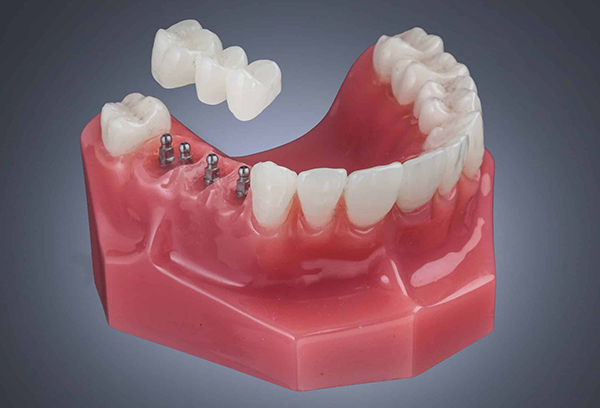
An implant supported bridge replaces multiple missing teeth by using dental implants as the foundation. We place the implants into the jawbone, where they can function much like artificial tooth roots.
After placement, the surrounding bone heals around the implants through a process called osseointegration. During this process, the jawbone bonds with the implant surface, creating the stable support needed for comfortable chewing and everyday function.
The visible part of the restoration is the bridge. We shape, shade, and polish this portion to blend naturally with your surrounding teeth. Many modern bridges use durable, lifelike materials such as porcelain, helping create a restoration that looks natural and functions reliably.
In this type of design, the bridge connects directly to the implants. A small access channel runs through the bridge so we can secure the restoration to the implants and access them later if maintenance is needed. This structure creates strong support without relying on nearby natural teeth.
How Mini Implants Can Make Treatment More Efficient
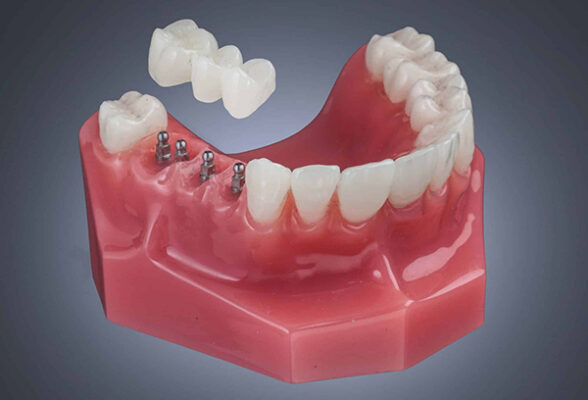
At Carolina Dental Arts, we often use mini dental implants to support implant bridges. Mini dental implants are less than 3 millimeters in diameter. They are roughly half the size of many traditional dental implants. Their smaller size gives us a strong foundation for a bridge while often making the placement process gentler on the surrounding gum and bone tissue.
In many cases, we can place mini dental implants using a minimally invasive technique. We create a small pilot opening through the gums and into the jawbone, then place the implant directly into that prepared site. Since this approach typically involves less tissue disruption, your body has less to heal afterward.
For many patients, that can mean less soreness, a shorter recovery period, and fewer restrictions after surgery. In some cases, we may also place the restoration immediately or shortly after implant placement. When your bone, bite, and treatment plan support that approach, it can shorten the overall timeline and help you enjoy a stable implant bridge sooner.
How To Care for Your Implant Supported Bridge
An implant supported bridge should feel secure, but it still needs daily care to stay healthy. The routine is similar to caring for a traditional bridge: brush twice a day with fluoride toothpaste, clean around the restoration carefully, and keep up with professional exams and cleanings.
The most important area to clean is beneath the bridge, where food particles and plaque can collect. Floss threaders, interdental brushes, or a water flosser can help you clean those spaces more effectively than regular brushing alone. During your visit, we can show you which tools work best for your bridge and how to use them without irritating the gums.
The main difference is what we are trying to protect. A traditional bridge rests on natural teeth, so daily care helps prevent decay in those supporting teeth. An implant bridge attaches to implants in the jawbone, so care focuses on keeping the gum tissue and bone around the implants healthy. Without consistent cleaning, plaque can irritate the tissue around implants and contribute to conditions such as peri-implant mucositis or peri-implantitis.
See If an Implant Supported Bridge Is Right for You
An implant supported bridge can replace multiple missing teeth with support from implants placed in the jaw. At Carolina Dental Arts, we use this approach to help restore your smile while preserving more of your natural tooth structure.
For patients who qualify, mini dental implants can make the path to an implant bridge more efficient. Their smaller size often supports a gentler placement process, which may lead to less soreness, a shorter recovery, and a more streamlined treatment timeline.
When you want a stable bridge without altering healthy neighboring teeth, we can help you understand your options. Book your free consultation at Carolina Dental Arts to find out if an implant supported bridge is right for you.