
 English
  Spanish
Think about one of the country’s landmark bridges, like the Golden Gate or the Brooklyn Bridge. When you look at it, you see a horizontal span held securely in place by strong supports. Those towering posts anchor the structure, allowing the roadway to stretch across open space without sagging. The same basic idea applies inside the mouth when several teeth in a row are missing. You have an open space, much like the gap between two landmasses. A dental bridge fills that space with a replacement structure that sits above the gumline, and the supports on either side keep it steady. In a traditional bridge, the anchor points come from the natural teeth beside the gap. With an implant bridge, the support is even more robust because dental implants provide anchorage throughout the area.
You’ll find that the overall concept is consistent across bridge options, though each relies on a different style of support. And when the support improves, the bridge stays secure and functions the way you expect it to.
What Is an Implant Bridge?
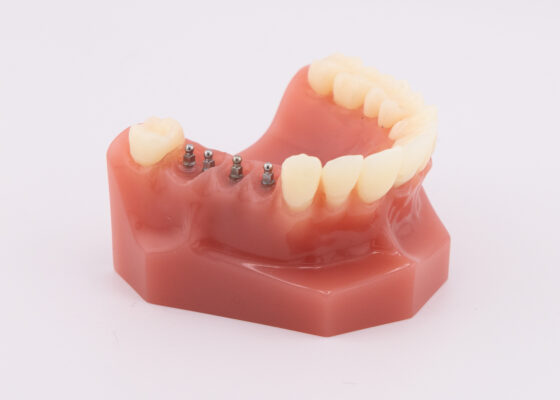
When several teeth are missing in a row, we rebuild that span by placing dental implants directly into the jawbone. They act like anchored supports beneath the surface, taking on the work once handled by natural roots. We position them in areas where the bone can provide reliable support, and as they fuse with the jaw, they create a sturdy foundation that keeps the bridge steady during chewing.
Above the gumline, the bridge comes together as a single, streamlined unit. You have the pontics that stand in for the missing teeth, plus an internal framework that distributes pressure the same way a bridge distributes weight across its supports. We design the entire structure to fit your mouth’s shape and move comfortably with your bite. Once we attach it to the implants, you feel the difference immediately: the bridge stays put and functions like a continuous row of teeth.
This approach differs from a traditional bridge, which relies on the teeth on either side of the gap. To anchor that type of restoration, we must reshape the enamel on those teeth, so dental crowns can fit over them. That preparation removes healthy tooth structure to create space, align the crowns, and help the bridge stay in place under biting forces. With an implant-supported design, you keep your natural teeth intact because the implants provide all the anchorage you need.
The Benefits of Dental Implants
When we place an implant into the jawbone, the surrounding bone responds in an interesting way. The bone doesn’t treat the implant as a foreign object. Instead, it grows toward it and bonds with its surface. In biology, structure follows function, and the body recognizes that the implant can take on the work once handled by the natural tooth root. As the bone attaches, the implant becomes a working part of the system.
You can think of this process as the jawbone’s version of strength training. Every time you bite or chew, natural tooth roots send a gentle pulse of pressure into the bone. That pressure tells bone cells to stay active, repair microscopic wear, and maintain density. When a root goes missing, the signals stop. The body rewrites the plan for that area, deciding that the unused bone no longer needs maintenance. Over time, the ridge shrinks, much like an unused muscle gradually loses strength.
When you chew on an implant-supported restoration, the implant transfers that pressure into the surrounding bone, giving it the stimulus it needs to stay engaged. A traditional bridge replaces the visible portion of missing teeth, but it cannot participate in the deeper biological work of maintaining the foundation beneath them. An implant-supported design fills the space above the gumline and supports the bone below it.
Learn How an Implant Bridge Can Support Your Smile
Implant bridges offer dependable support because they stabilize the teeth above the gumline and keep the jawbone engaged beneath it. If you want to understand how this approach could work for you, we can examine the area and review the options that fit your needs. If you want clarity on your bone support or replacement options, we can walk you through them as well. Contact us today to schedule a free consultation and learn more about implant-supported care.