


Small-diameter dental implants can give some patients another option when there is not enough bone for a conventional implant. The reason comes down to something many people never think about until a tooth is gone: your tooth root and jawbone were working together the whole time.
Did you know the size of your jawbone can change after you lose a tooth? Without the root transferring pressure from biting and chewing into the surrounding bone, that area can gradually shrink. Many people do not realize this has happened until they start exploring dental implants. They may have been missing a tooth for years, wear dentures, or are seeking a second opinion after being told they do not have enough bone for treatment.
Small-diameter dental implants, or mini dental implants, require less bone for placement than conventional implants, which can make them worth a closer look. Their narrower design gives us another way to work with the bone you already have and, in some cases, avoid adding more procedures before implant placement.
Why Small-Diameter Dental Implants Require Less Bone
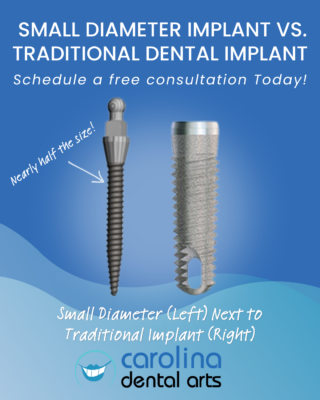
The difference between a conventional implant and a small-diameter implant may be only a few millimeters. But those few millimeters can change what your existing bone can support.
Conventional dental implants average about 5 millimeters in diameter. Small-diameter implants, which we also use at Carolina Dental Arts, are less than 3 millimeters in diameter. The size difference gives us more flexibility when available bone is limited.
A dental implant sits inside your jawbone. The implant post replaces the missing tooth root, so there needs to be enough bone around it to hold it securely. A wider implant naturally needs more room. If the jawbone has narrowed after tooth loss, a conventional implant may require a bone graft before placement.
A small-diameter dental implant requires less space than other dental implant options. For some patients, we can work with the bone that is already there and avoid adding a grafting procedure to the treatment plan.
We still need to evaluate the amount and quality of your bone to determine whether this approach is appropriate, but having a narrower implant gives us another option when less bone is available.
When Are Small-Diameter Dental Implants the Better Fit?
Now that we know that small-diameter implants require less bone and involve a smaller placement site, it’s natural to wonder why we don’t use them for everyone.
Implant size is one part of a much larger treatment plan. At Carolina Dental Arts, we offer both small-diameter and conventional dental implants because different situations call for different approaches.
For some patients, a conventional implant would require additional steps before we could replace the missing tooth. Bone grafting is one example, but your ability to undergo surgery and heal comfortably matters, too.
Age alone does not determine whether you can receive dental implants. However, some patients have medical conditions, take multiple medications, or have other health considerations that make a more involved surgical procedure more difficult.
Small-diameter implants require a smaller placement site, which limits disruption to the surrounding tissues and may reduce the physical demands of treatment.
Take a Closer Look at Your Dental Implant Options
Being told you do not have enough bone for a conventional implant does not always mean the discussion ends there. Small-diameter dental implants give us another way to evaluate what may be possible with the bone you already have.
A few millimeters can change the direction of treatment. At Carolina Dental Arts, we can compare your implant options. We will explain what your bone can support and help you understand whether a smaller implant is right for you. Schedule a free consultation and take another look at what’s possible!