

As you navigate tooth replacement, you may ask yourself, “Why are there different types of dental implants? And which one is right for me?”
At Carolina Dental Arts, we offer free implant consultations for a reason. Tooth replacement is a journey that requires thoughtful planning. It also requires honest conversations about your health, your goals, and the kind of treatment experience you want.
One of the philosophies we value at our practice is to keep learning and keep evolving. That mindset helps us stay current with dental implant options and choose treatments that can make the process easier for patients. And yes, that includes rethinking what dental implant treatment can look like.
How the Types of Dental Implants Shape Your Treatment Plan
When people start looking into dental implants, they often expect one clear option. A missing tooth needs a replacement, an implant supports it, and the process moves forward from there. But dental implant treatment is not quite that uniform.
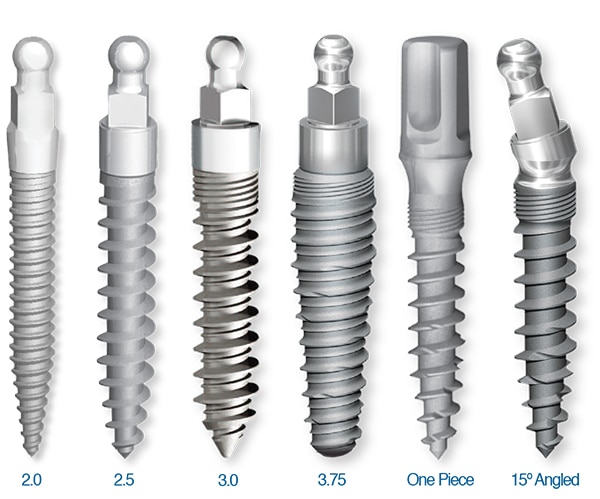
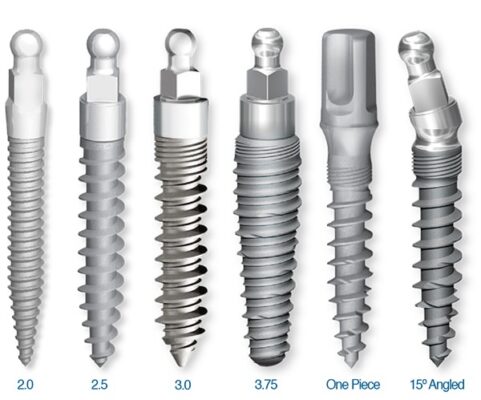
Dental implants come in different sizes, designs, and systems. Those differences exist for a reason. Every implant has the same basic job: to support your replacement tooth or teeth. The way each implant does that job can change the experience around it.
For patients, those details can shape some of the biggest questions about treatment. How involved will the procedure be? How much healing will your mouth need? What will the treatment timeline look like? Will bone loss affect your options? How will the type of implant influence cost?
At Carolina Dental Arts, we use both traditional dental implants and mini dental implants. Traditional implants average 5 millimeters wide and come in separate parts. First, we place the implant in the jawbone. After the area heals, we attach a separate connector called an abutment. The final tooth replacement is then secured on top.
The mini dental implant process differs because it falls into the category of one-piece implants. A one-piece implant combines the implant post and abutment into a single structure. The connector is already built in from the start.
That design difference may sound small, but it can affect quite a bit. A smaller, one-piece implant can simplify the placement process and reduce the number of separate treatment steps. It may also make implant treatment possible for patients who have been told they do not have enough bone for traditional implants.
These key differences can also influence the overall cost, since fewer parts, fewer appointments, and a less involved procedure can change the total investment.
The Best Types of Dental Implants for Limited Jawbone
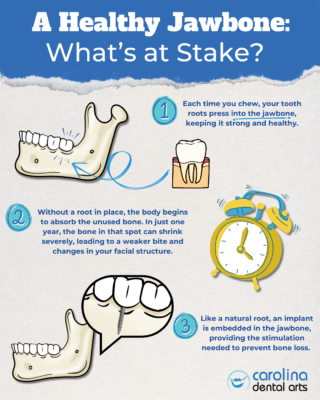
When a tooth is lost, the jawbone loses the root that once helped keep it active. Every time you bite or chew, natural tooth roots stimulate the bone. Without that stimulation, the bone gradually begins to shrink. We call this process bone resorption.
Bone loss can make implant treatment more complicated because implants need enough bone around them for support. Traditional dental implants are wider, so they usually require more bone volume in height, width, and depth. When the jaw ridge has become too small, a traditional implant may not fit securely without additional treatment.
Mini dental implants can often help in these situations. Since they are much narrower than traditional implants, we can place them in slimmer areas of bone where a standard implant may not be possible.
Will You Need a Bone Graft? Here’s How We Tell…
To evaluate your bone volume, we typically use CBCT imaging. CBCT stands for cone beam computed tomography, a type of dental imaging that gives us a detailed 3D view of your jawbone.
These images help us see the height, width, and depth of the bone. They also show areas where nerves, sinuses, or other structures may limit implant placement. From there, we can determine how much bone is available and where an implant can be safely supported.
For some patients, mini dental implants may reduce or eliminate the need for bone grafting. Grafting can be useful when the jawbone needs more volume, but it also adds healing time, appointments, and cost.
Mini dental implants give us another option when bone volume is limited. Their narrower size may allow us to use the bone already present, which can make treatment possible sooner in some cases.
Choose a Dental Implant Path That Makes Sense
Dental implants are not one uniform treatment, and that is a good thing. The type of dental implant depends on your bone volume, treatment timeline, comfort with the procedure, and overall goals for tooth replacement. At Carolina Dental Arts, we use your consultation and CBCT imaging to look at those details clearly before recommending a treatment plan.
If you want to know which type of dental implant may work for you, schedule a free implant consultation with Carolina Dental Arts.