

Full-arch tooth replacement has changed more than many people realize. Not long ago, replacing a full set of teeth typically meant a traditional removable denture. That was simply the expectation. Today, the conversation looks very different. You are no longer limited to teeth that rest on the gums and rely on suction or adhesives. Implant-based options now allow us to anchor a full arch of teeth directly to the jawbone, creating a level of stability that many patients thought disappeared with their natural teeth. Along the way, you may encounter terms like Fix-on-Six or All-on-4. These names can sound like marketing language or technical shorthand, and for many people, they raise more questions than answers.
Instead of focusing on the labels, we will focus on what actually matters. What do these treatments involve? How do they work? And how do they differ from one another? At Carolina Dental Arts, we are here to answer all of your questions.
What Is All-on-4?
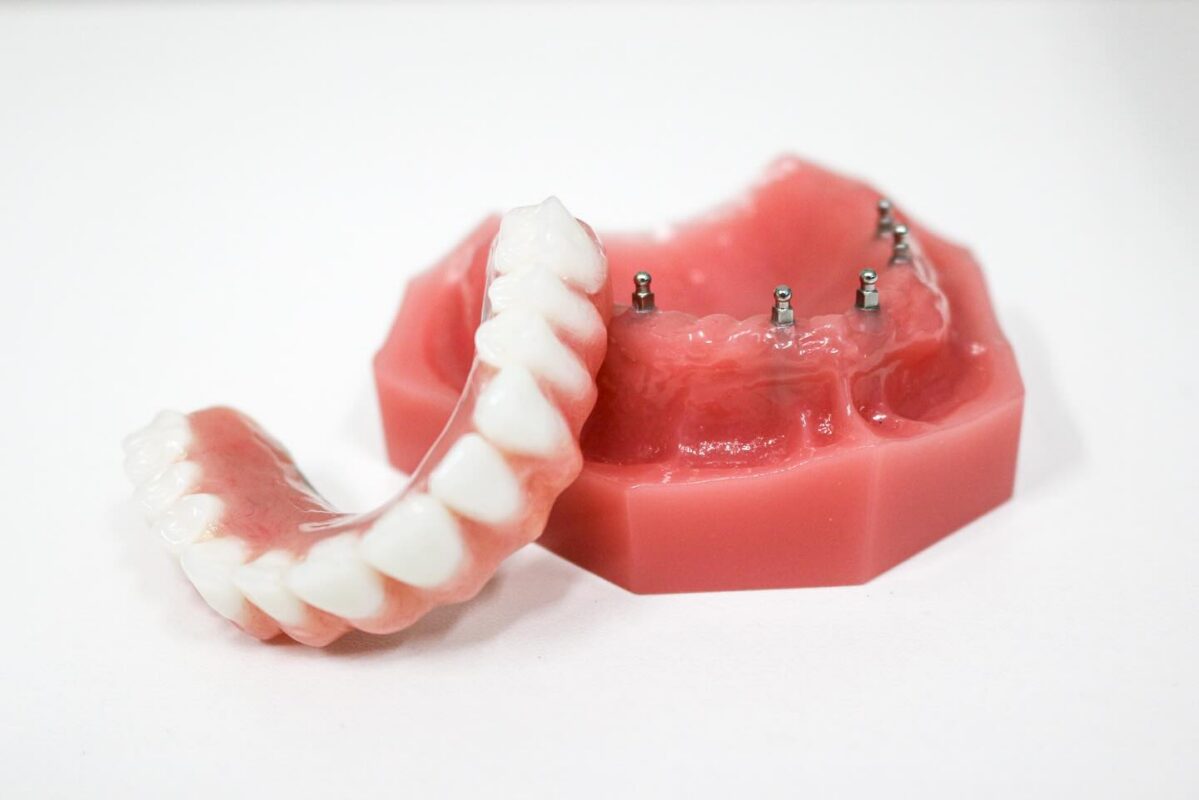
All-on-4® makes more sense when you read the name from the inside out. Each word describes a specific part of the treatment. The “4” refers to the dental implants that support your new teeth. We place approximately 4 dental implants into your upper jaw, lower jaw, or both. We position each implant directly into your jawbone, where it functions like an artificial tooth root.
Following placement, your bone gradually bonds to the surface of the implants through a process called osseointegration. As this bond develops, the implants become firmly anchored within your jaw.
This connection changes how your new teeth handle everyday forces. When you bite and chew, pressure is transmitted through the implants into the bone rather than being concentrated solely in the gums. That support improves stability and helps prevent the shifting or movement commonly associated with traditional dentures.
Fixed Bridge: How Your New Teeth Stay Secure
Once the implants are stable and properly integrated, we attach a roundhouse bridge. A roundhouse bridge replaces all the teeth in a single arch using a continuous, horseshoe-shaped design that follows the natural curve of your jaw.
On the upper arch, the bridge leaves your palate uncovered, which helps avoid the heavy, “fully covered” feeling associated with traditional upper dentures.
We secure the bridge directly onto your implants. You do not remove it at home, and it does not rely on adhesives or suction. Clinically, the bridge is considered semi-removable. During routine maintenance visits, we remove it to thoroughly clean the implants and the area beneath the restoration, then reattach it. The teeth remain fixed, and you brush and care for them much like natural teeth
Fix-on-Six vs. All-on-4: How Are They Different?
All-on-4® is a clever name that describes how your new teeth stay supported. Many patients naturally compare it to another fixed full-arch option, Fix-on-Six®. Both treatments replace an entire row of teeth and secure that restoration to implants anchored in your jawbone. The distinction lies in how the support system works.
Mini Implants vs. Traditional Implants: Size, Fit, and Function
A traditional dental implant measures around 5 millimeters in diameter. An implant of that width requires sufficient bone volume. When the bone is too thin or has resorbed over time, a bone graft may be needed to create enough support.
Mini dental implants measure just under 3 millimeters in diameter, making them nearly half the width of many traditional implants. Because mini implants are narrower, we can often place them in areas with reduced bone without first rebuilding the site.
Four vs. Six: Different Ways To Stabilize an Arch
With All-on-4, a full-arch restoration is supported by four implants. The bridge depends entirely on those four anchors. Because support is limited to a few implants, biting and chewing forces are concentrated across them. If one implant fails, the bridge loses part of its foundation.
We would then need to evaluate the remaining implants, check the stability of the restoration, and determine whether the failed implant needs replacement.
Fix-on-Six® uses more dental implants. The bridge is supported by more anchors, which distribute the functional forces more evenly. If an implant develops a complication, the restoration often remains stable while we assess the situation and decide on the appropriate corrective step.
However, the number alone does not determine which option is appropriate. We will evaluate your bone structure and restorative goals before recommending a treatment approach.
Considering a More Stable Alternative to Traditional Dentures?
Modern implant dentistry has created new possibilities for replacing a full arch of teeth. The next step is to determine which approach best fits your unique situation.
At Carolina Dental Arts, we will walk you through your options, explain the advantages and considerations of each treatment, and build a plan tailored to your goals.
Schedule a free implant consultation to explore your full-arch restoration options.