
 English
  Spanish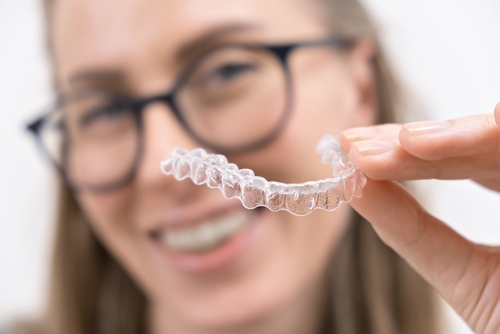
Some comparisons seem to show up everywhere, woven into everyday conversations without much effort. Coke or Pepsi. Coffee or tea. Paperback or audiobook. Window seat or aisle. These familiar either-ors tend to spark light debate, reveal personal habits, and encourage comparison without requiring anyone to be right. In recent years, oral health has joined that lineup. Patients now ask whether clear aligners work better than braces.
The question comes up the same way the others do, with curiosity and comparison guiding the conversation. Two options. Two approaches. One shared goal. And, as with most either-ors, the answer depends on what you value once the details come into view.
Do Clear Aligners Work Better Than Braces?
When we answer whether one option works better than the other, we have to define what “better” actually means. Clear aligners and braces address the same goal, but they use different mechanics to move teeth.
Clear aligners rely on a series of custom-made trays that fit over all of your teeth at once. Each tray applies a specific amount of pressure, then hands the job off to the next tray in the sequence. Braces use a fixed system. We bond brackets directly to each tooth and connect them with a wire that guides movement over time. Both approaches apply controlled force. Both require thoughtful planning. Neither works by simply pushing teeth into place.
For many patients, effectiveness begins with comfort. Clear aligners tend to feel smoother because they don’t press directly against the gums or cheeks. Brackets and wires can irritate soft tissue, especially after adjustments. That irritation does not reduce how well braces work, but it does influence how treatment feels day to day.
Why Treatment Time Looks Similar Either Way
Tooth movement does not happen because metal or plastic is stronger. Teeth move because bone responds to pressure. When we apply steady force, the bone on one side of a tooth begins to break down, while new bone forms on the other side. This process is called bone remodeling, and it happens slowly by design. On average, teeth can move about one millimeter per month without risking damage. Pushing faster than that increases the chance of root shortening, gum problems, or relapse after treatment ends.
That biological timeline applies to both braces and clear aligners. The appliance does not change how bone behaves. Mild crowding may resolve in six to twelve months. More complex bite issues can take two to three years. Treatment length varies because mouths vary, not because one system ignores biology better than the other.
So when patients ask which option works better, the answer depends on how you define success. Comfort, appearance, compliance, and the type of movement required all matter.
What Are The Benefits of Choosing Clear Aligners Over Braces?
If you were to place braces and clear aligners side by side on a chart and list what you can and cannot do during treatment, the column for braces tends to fill up quickly. Fixed brackets and wires bring more rules into daily life, simply because they stay in place no matter what you are eating, cleaning, or doing.
Clear aligners change how treatment fits into daily life. You remove them for meals, which means eating without worrying about damaging hardware or navigating food restrictions. You also remove them to brush and floss, so your hygiene routine stays familiar instead of becoming a workaround. That difference matters, especially when long-term oral health is part of the goal.
Depending on the issue being treated, clear aligners and braces often sit in the same range in terms of what they can accomplish. Both can straighten teeth, close gaps, and correct many bite concerns when treatment is planned properly. The difference is not so much in capability as in day-to-day experience. Clear aligners offer more freedom in how you eat, clean, and move through your routine, along with a more discreet appearance. For many patients, that combination does not change the destination, but it does change how the process fits into real life.
Begin Your Orthodontic Treatment With Clarity
If you are considering orthodontic treatment, now is the moment to move from comparison to progress. Clear aligners and braces can both create meaningful change, but the right option depends on how your teeth move and how treatment fits into your daily routine. Understanding those differences helps turn a familiar either-or into a clear path forward.
Book a free consultation today to explore your options and see which approach aligns with your goals.